

For historical places in Bikaner, start with Junagarh Fort and continue to the Rampuria Havelis in the old city. Bhandasar Jain Temple offers another historic stop, while Laxminath Temple is an alternative named in this walk’s route plan.
Tanisha Heritage Haweli is about a 4-minute walk from the fort, and the fort is about a 4-minute walk from a three-star hotel in Bikaner.
- Start: Junagarh Fort, in Bikaner, Rajasthan.
- Old-city stop: The Rampuria Group of Havelis.
- Temple option: Bhandasar Jain Temple, a religious-use site inside the old city.
- Fort hours: 10:00 AM to 4:30 PM; check the official site before you go.
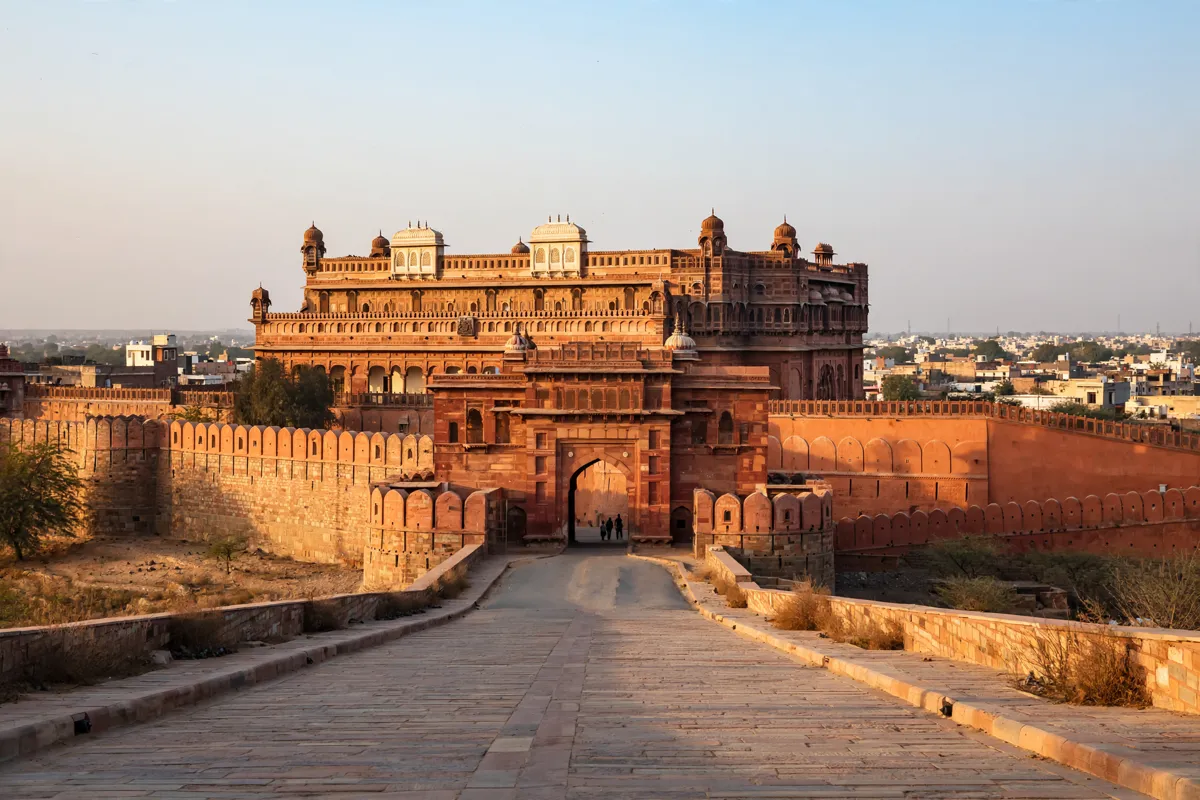
Start near Junagarh Fort
Junagarh Fort is a fitting first stop for Bikaner history, with origins that reach back to the city’s early years. Incredible India says Rao Bika laid the fort’s foundations in 1478, when it was initially called Chintamani; its present form was unveiled on 17 February 1589.
Suraj Pol and Karan Pol are among the fort’s gates. Inside, Karan Mahal and Phool Mahal are notable named spaces. Daulat Pol bears handprints associated with royal women who committed sati, a detail that calls for a thoughtful approach to the site’s history.
For more context before your visit, the Junagarh Fort guide to tickets and history covers the landmark in greater depth.
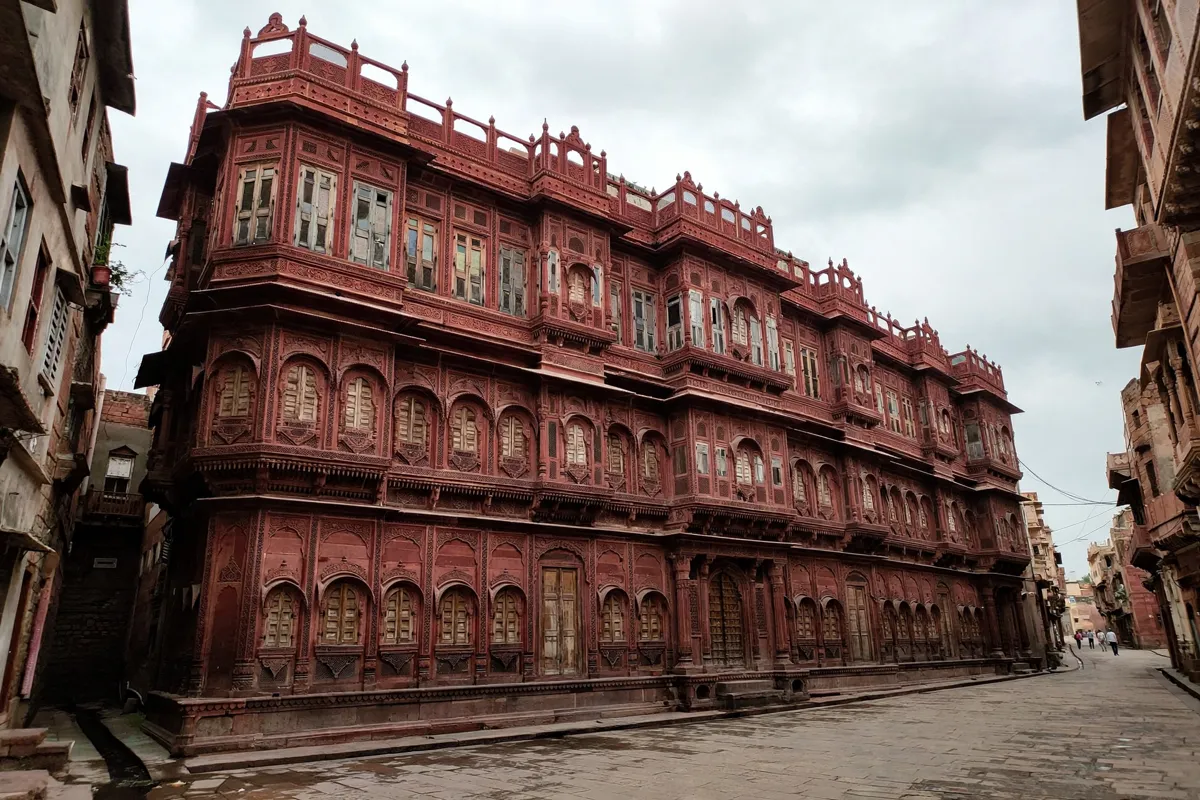
Walk toward the old-city havelis
The Rampuria Group of Havelis is Bikaner’s best-known haveli cluster, set in the old city. These aristocratic homes are a natural next heritage focus after the fort, though the facts here do not establish a specific walking route between them.
Look for the defining details of the area: carved walls, open courtyards and red-sandstone buildings. The havelis are historic residences, so take in their street-facing architecture without assuming every building is open to enter.
To pair the heritage walk with a look at the city’s trading life, Bikaner’s KEM Road, Kotegate and old-city bazaars offer a separate subject to plan around.
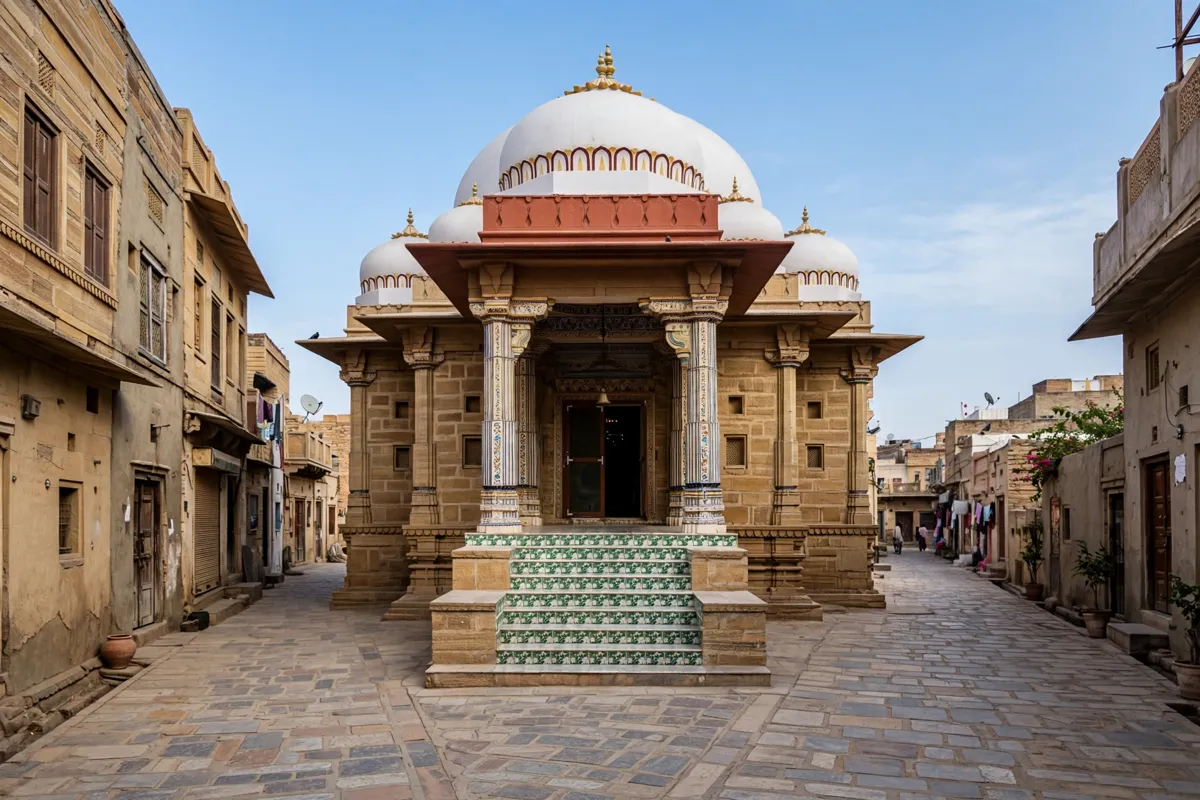
Add Bhandashah Jain Temple or Laxminath Temple
Bhandasar Jain Temple adds a religious landmark inside Bikaner’s old city. It is dedicated to Sumatinath and remains in religious use, so approach it as an active place of worship rather than simply as a monument.
Sources give differing accounts of the temple’s age. Incredible India says it was built in 1428, before Bikaner’s founding, and is maintained by the Archaeological Survey of India. An IGNCA/ASI monument record assigns it stylistically to around the 12th century AD and says it was extensively renovated in later periods. The same record describes painted interior walls and pillars.
Laxminath Temple is another temple option in the planned walk, but no further details are included here. Keep the choice simple: make Bhandasar Jain Temple the old-city temple stop, or set aside Laxminath Temple as an alternative.
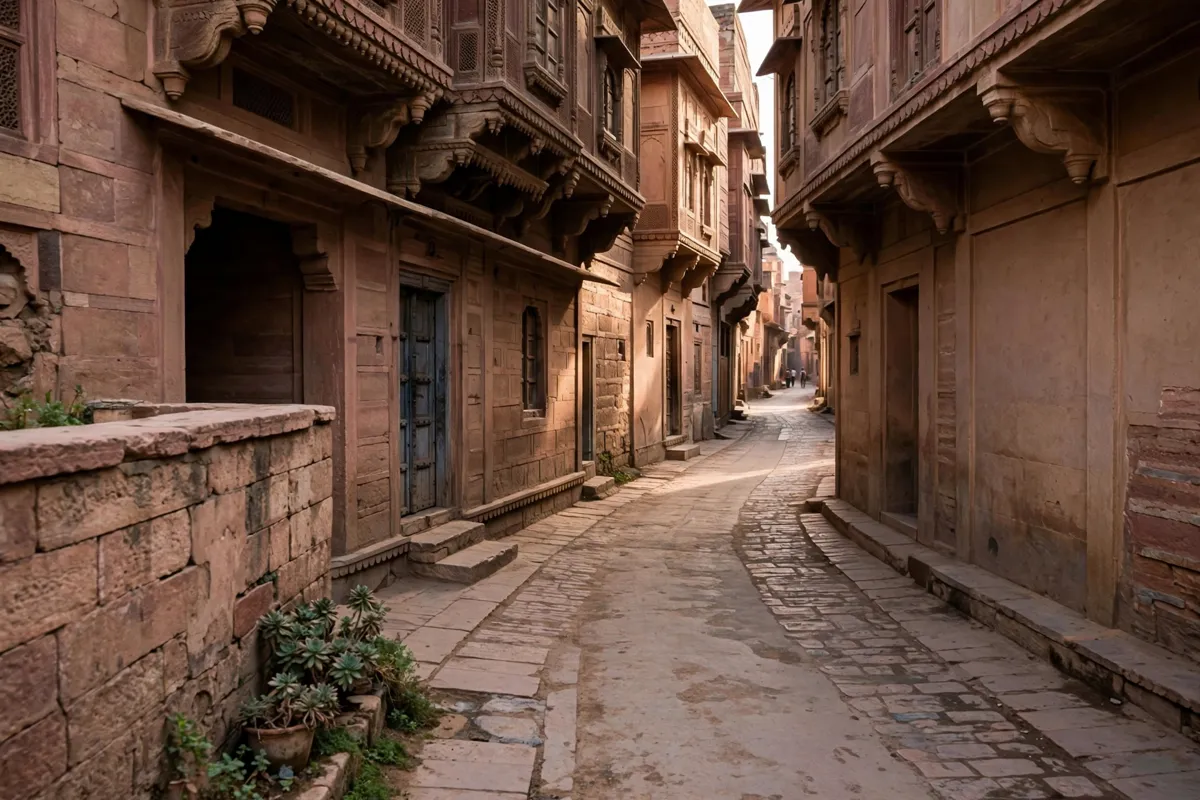
Route, walking conditions and time
A practical sequence is to begin at Junagarh Fort, focus next on the Rampuria Havelis, then decide whether to include a temple. This order groups the fort and old-city heritage themes, but it is not a measured walking route: no between-stop distances or journey times are established here.
For the fort, visiting hours are 10:00 AM to 4:30 PM. Opening schedules can change, so check Incredible India's official site before you go. Bikaner Railway Station (BKN) is the nearest railway station to Junagarh Fort.
If you want to add time for market streets, keep that as a separate part of the day rather than assuming it falls directly along the route; the city’s old-city bazaars have their own distinct focus.
Respectful visits in active religious places
Bhandasar Jain Temple is in religious use and is under Jain Trust ownership and administrative control, according to the IGNCA/ASI monument record. Treat the temple as an active religious place during your visit, and be attentive to worshippers and the site’s use.
The temple’s painted interior walls and pillars are part of its architectural interest, but this walk focuses on the old-city setting and the temple’s heritage rather than assuming access to interior spaces. Check current visiting arrangements with an official source before planning around entry.
FAQs
Which historical places in Bikaner fit into this walk?
Junagarh Fort, the Rampuria Group of Havelis and Bhandasar Jain Temple are strong heritage stops in Bikaner’s historic centre. Laxminath Temple is an alternative temple stop.
What are Junagarh Fort’s visiting hours?
The fort is open from 10:00 AM to 4:30 PM; check Incredible India's official site before you go in case arrangements change.
Is Bhandasar Jain Temple still used for worship?
Yes. An IGNCA/ASI monument record describes it as being in religious use.
What is the nearest railway station to Junagarh Fort?
Bikaner Railway Station (BKN) is the nearest railway station to the fort.