

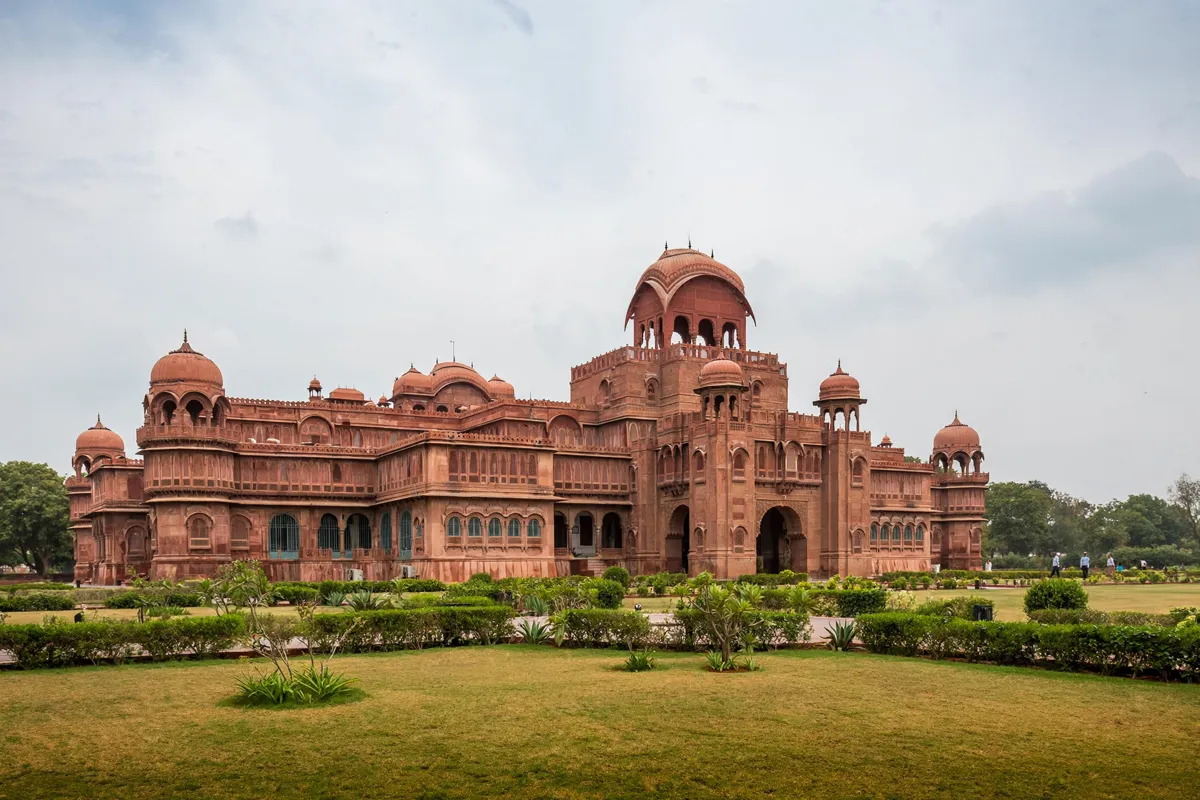
Laxmi Niwas Palace is a former royal residence in Bikaner, Rajasthan, and now operates as a luxury hotel. Lalgarh Palace is a separate palace commissioned by Maharaja Ganga Singh, though the names overlap in descriptions of the Laxmi Niwas complex.
- Location: Bikaner, Rajasthan.
- Present-day use: Laxmi Niwas Palace is a luxury hotel.
- Architecture: Laxmi Niwas was built in the Indo-Saracenic style, while Lalgarh Palace is made entirely of red sandstone.
How Laxmi Niwas Palace relates to Lalgarh Palace
Laxmi Niwas Palace and Lalgarh Palace have connected histories, but their names do not always refer to the same thing. Rajasthan Tourism describes Laxmi Niwas as the former residence of Maharaja Ganga Singh, now a luxury hotel, and also identifies Lalgarh Palace as a private wing within Laxmi Niwas where Princess Siddhi Kumari lives.
Separately, Lalgarh Palace was commissioned by Ganga Singh in 1902 to commemorate his father, Maharaja Lal Singh. It was designed by Sir Swinton Jacob. This distinction helps make sense of references to Lalgarh as both a palace in its own right and a wing associated with Laxmi Niwas.
For another chapter of Bikaner’s royal history, the guide to Junagarh Fort’s history and visits covers a nearby landmark that Rajasthan Tourism places about 10 minutes from Laxmi Niwas Palace, without specifying the mode of travel.
Palace architecture and history
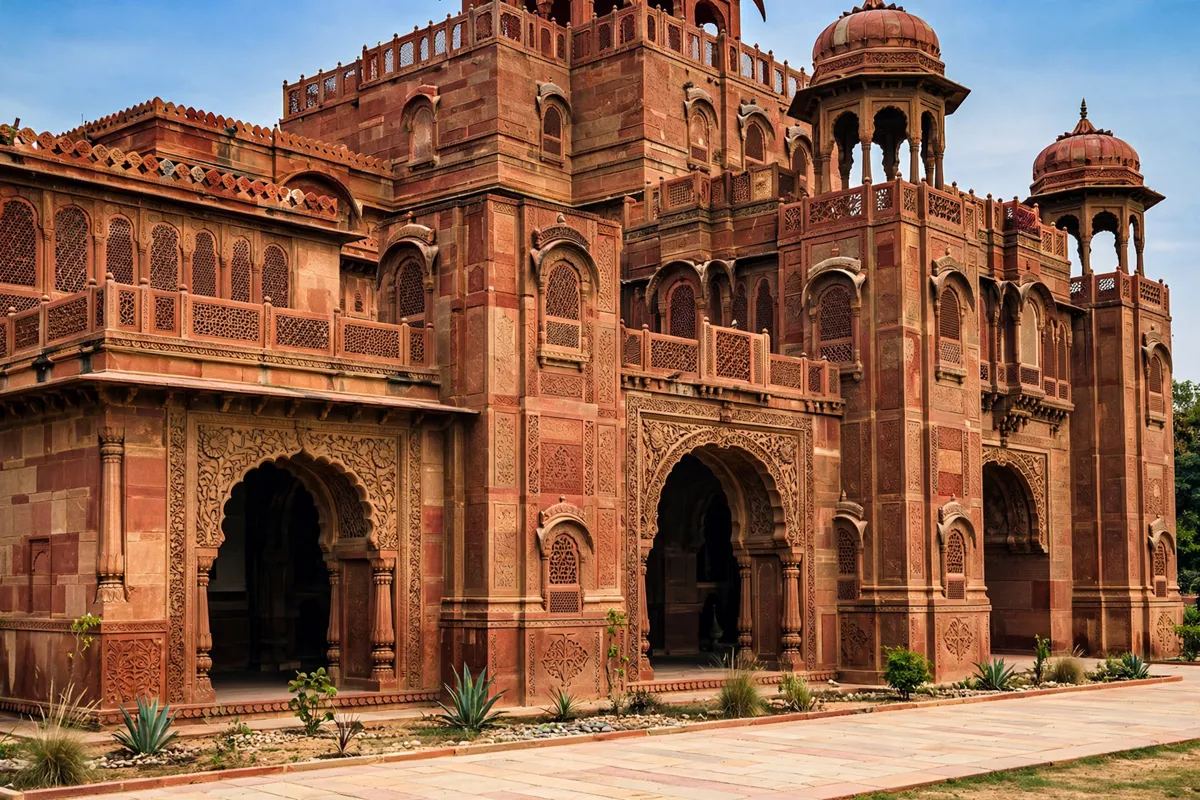
Laxmi Niwas Palace is an Indo-Saracenic building of red sandstone, distinguished in Rajasthan Tourism’s description by hand-painted friezes and gold-painted walls. The guide also describes a billiards room and a bar displaying trophies from royal hunts, along with 52 rooms, including suites.
Construction and commissioning dates for Laxmi Niwas Palace span 1898 to 1904. British architect Sir Samuel Swinton Jacob designed the palace in the Indo-Saracenic style, and Maharaja Ganga Singh commissioned it.
Lalgarh Palace offers a related but distinct architectural story: Rajasthan Tourism describes it as made entirely of red sandstone and identifies Sir Swinton Jacob as its designer.
The two palaces are therefore linked through Ganga Singh and Jacob, as well as through their association in descriptions of the Laxmi Niwas complex. A walk through Bikaner’s historic centre covers the city’s historic streets and landmarks.
What visitors can access
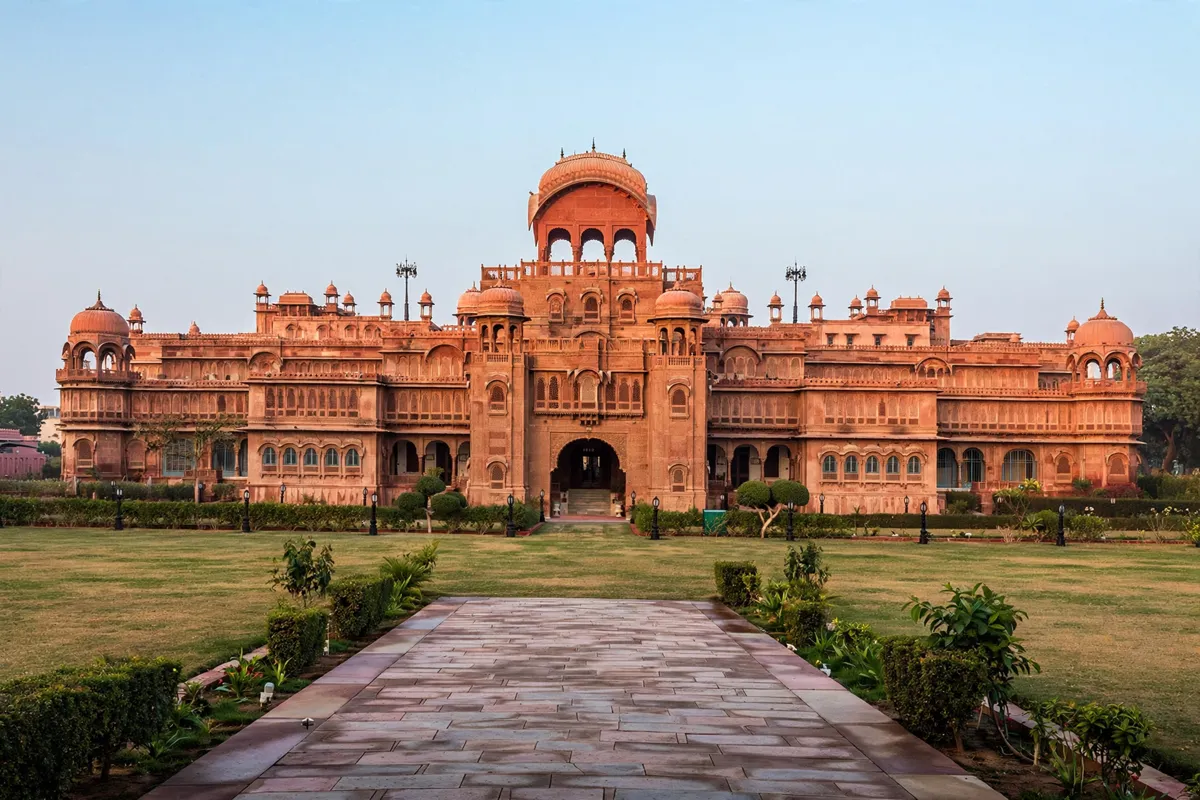
Laxmi Niwas Palace currently functions as a luxury hotel, so access to its rooms and private areas should not be assumed. Rajasthan Tourism describes a private wing associated with Lalgarh Palace and notes that the palace lawns are used for wedding functions, with capacity for up to 1,000 people.
The guide’s descriptions of rooms, interiors and grounds do not establish which areas are open to non-guests or whether tours are available. If you are planning a visit, confirm access arrangements directly with the palace rather than expecting to enter the hotel’s private spaces.
How do you get to Laxmi Niwas Palace from central Bikaner?
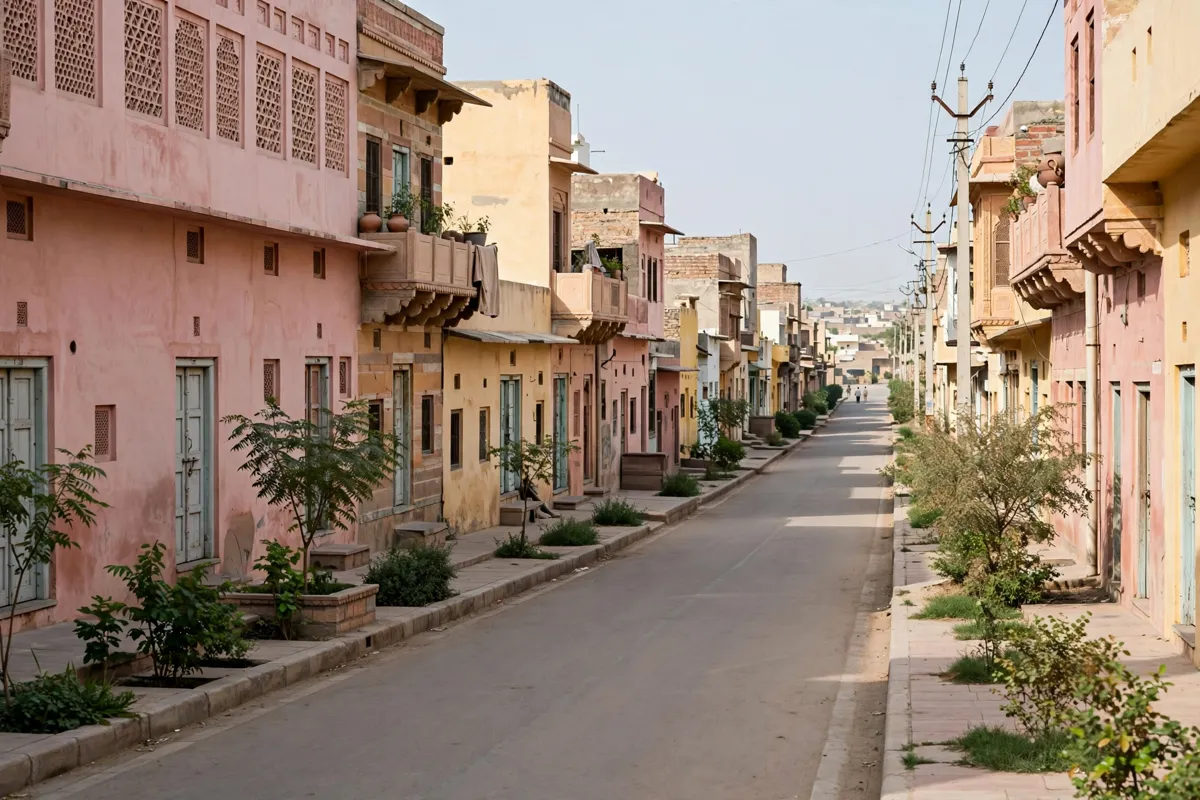
Laxmi Niwas Palace is in Bikaner, and Rajasthan Tourism places it about 10 minutes from Junagarh Fort and Prachina Museum without specifying a travel mode. The palace is about 13 minutes by car or 35 minutes on foot from Tanisha Heritage, a three-star hotel.
The palace’s address is Dr. Karni Singhji Road, Bikaner, Rajasthan 334001.
Checking current visiting arrangements
Because Laxmi Niwas Palace operates as a hotel and includes private areas, check the official site before you go to confirm whether visitors can enter and what arrangements apply. Its address is Dr. Karni Singhji Road, Bikaner, Rajasthan 334001.
FAQs
Is Laxmi Niwas Palace the same as Lalgarh Palace?
Not exactly. Lalgarh Palace was commissioned as a palace in its own right, while Rajasthan Tourism also identifies a private wing called Lalgarh Palace within Laxmi Niwas.
Can you visit the palace without staying there?
Confirm current entry arrangements with Laxmi Niwas Palace before planning a visit.
Who designed Laxmi Niwas Palace?
British architect Sir Samuel Swinton Jacob designed Laxmi Niwas Palace in the Indo-Saracenic style. Its construction and commissioning dates span 1898 to 1904.