

Junagarh Fort Bikaner is a strong starting point for a day of sightseeing, followed by the old city’s havelis and temples. You can finish with the National Research Centre on Camel if its afternoon hours and Sunday and public-holiday closures suit your plans.
- Start with Junagarh Fort, built in 1588 AD.
- Keep the old city for havelis and Bhandasar Jain Temple.
- Reserve the camel centre for the afternoon; it is 8 km from Bikaner city.
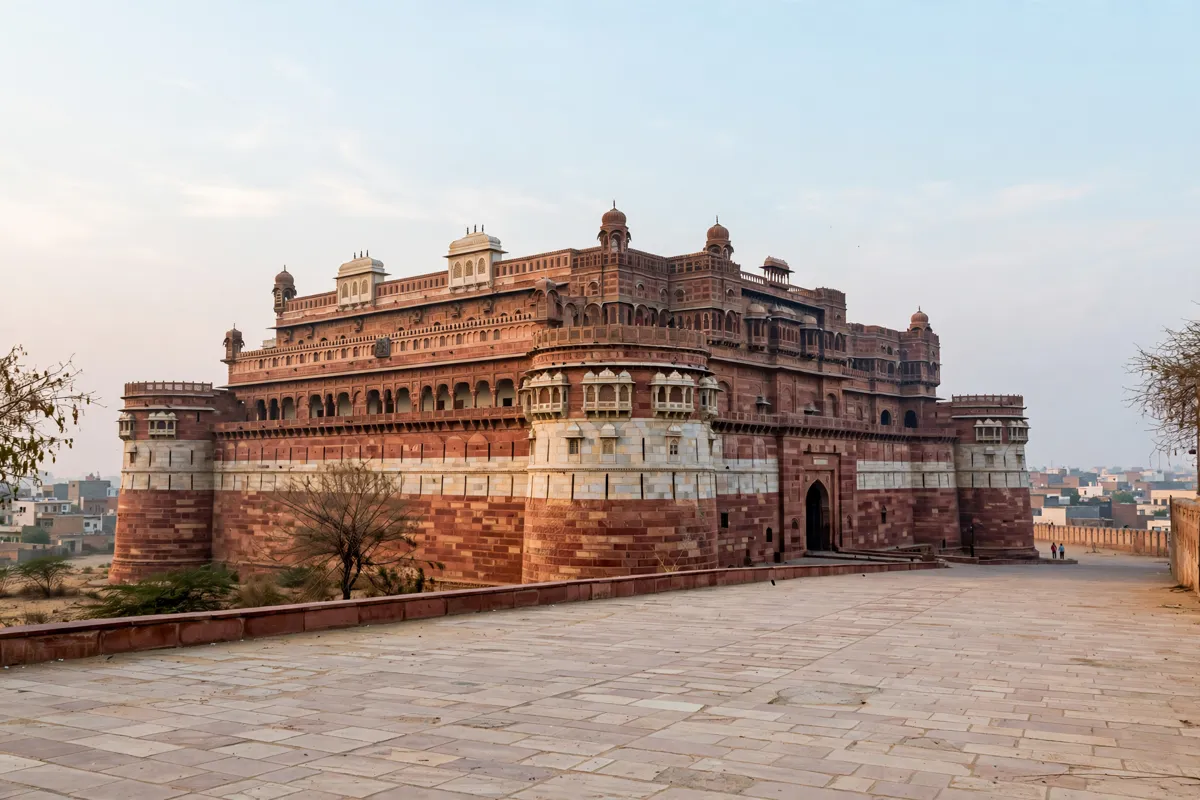
Morning at Junagarh Fort
Begin your day at Junagarh Fort, a complex of palaces, courtyards and carved architectural details in Bikaner. Raja Rai Singh, one of Emperor Akbar’s generals, constructed the fort in 1588 AD.
Inside the complex, palaces made of red sandstone and marble sit alongside courtyards, balconies, kiosks and windows. Rajasthan Tourism describes the fort as a bastion that has never been captured.
Give the fort the first part of your day, then continue into the historic centre. For a closer look at its history and visiting details, the Junagarh Fort Bikaner guide covers the site in more depth.
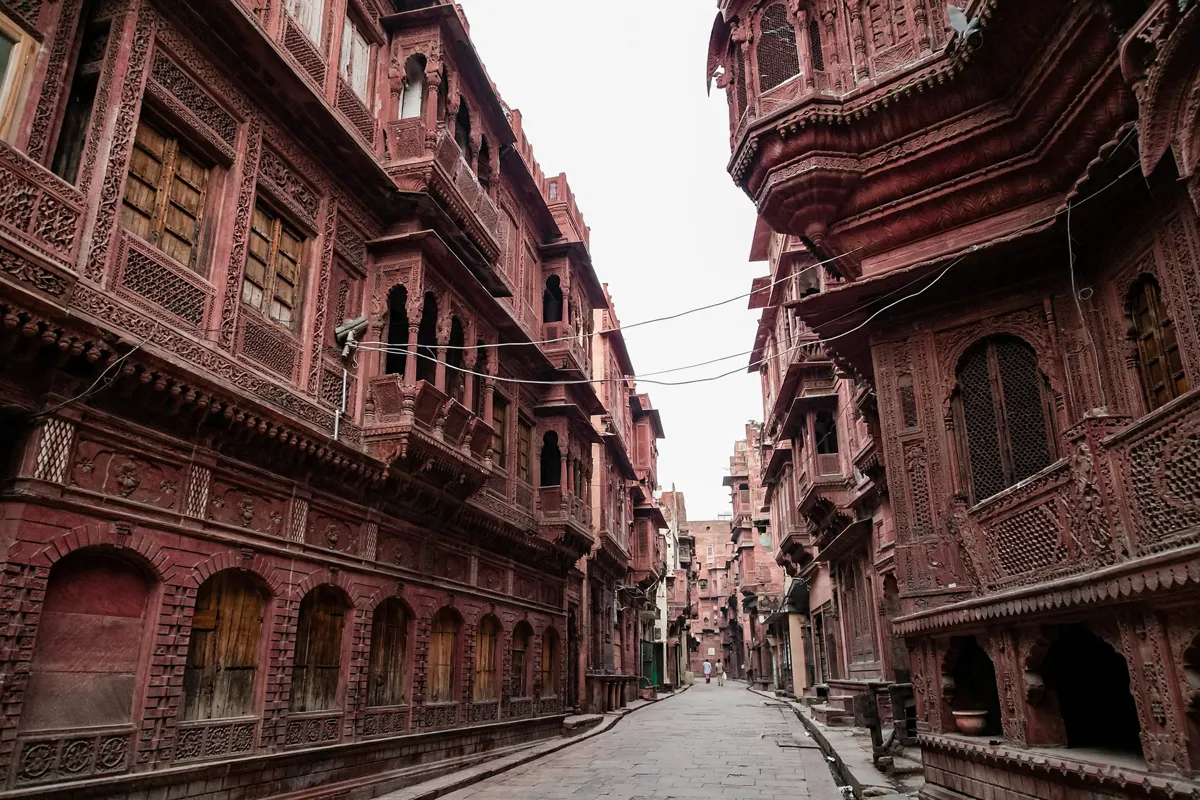
Old-city havelis and streets
After the fort, make the Rampuria Havelis and the old-city streets your next sightseeing focus. This keeps the central part of the itinerary together before you decide whether to add a farther-afield stop.
A walk through Bikaner’s historic centre can connect the havelis with the old city’s temple area. The route is best treated as a flexible stretch of the day: no fixed walking duration is needed to make it the link between the morning fort visit and a temple stop.
The historic-centre walking route focuses on this part of Bikaner.
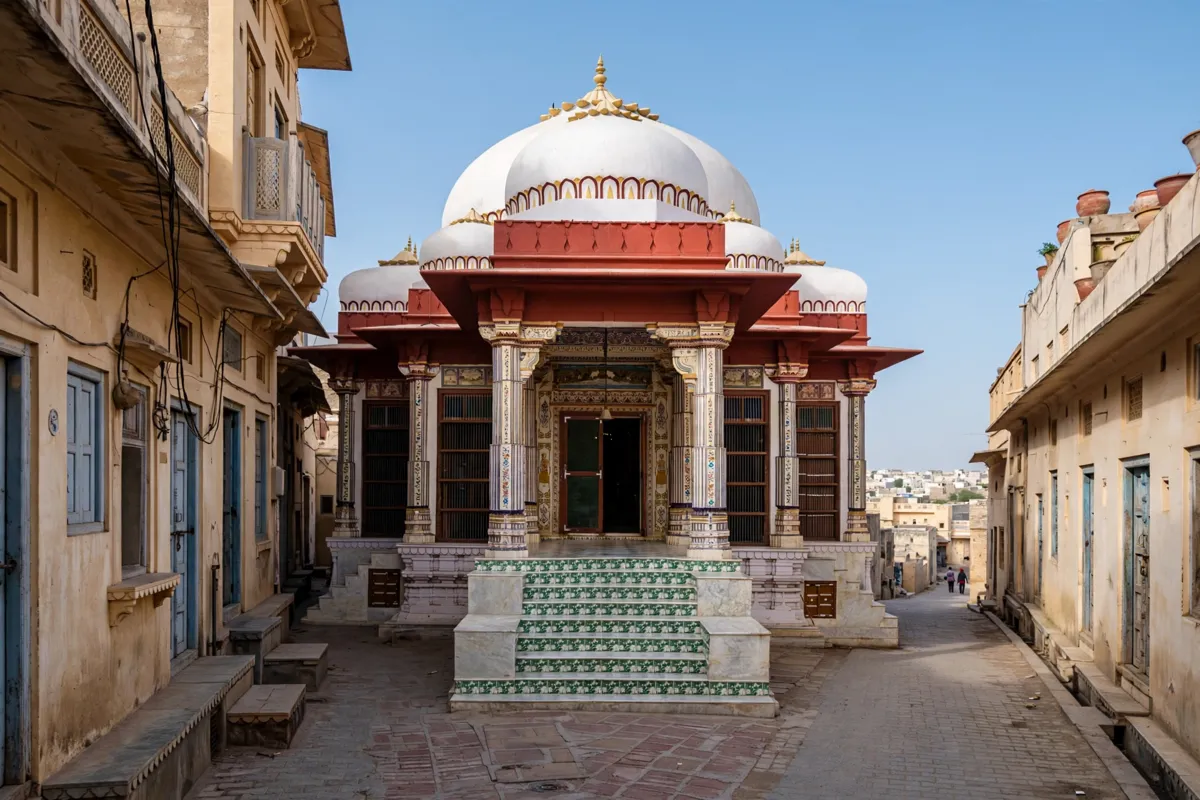
A temple stop and lunch break
Bhandasar Jain Temple makes a natural old-city stop after the havelis. The 15th-century temple is dedicated to Sumatinath, the fifth Tirthankara, and sits inside Bikaner’s old city.
Rajasthan Tourism describes Bhandasar as one of Bikaner’s oldest monuments, with mirror work, murals and gold-leaf paintings. The monument record identifies the temple as being under Jain Trust ownership and control.
Another temple associated with the city’s history is Laxminath Temple. Rajasthan’s rulers regarded Lord Laxminathji, or Lord Vishnu, as Bikaner’s real king and themselves as his ministers; the temple is visited each year by local people and devotees from distant places.
Use the temple visits to break up the day before lunch. The itinerary does not require a set meal stop, so you can keep this pause in the old city and adjust the afternoon plan around it.
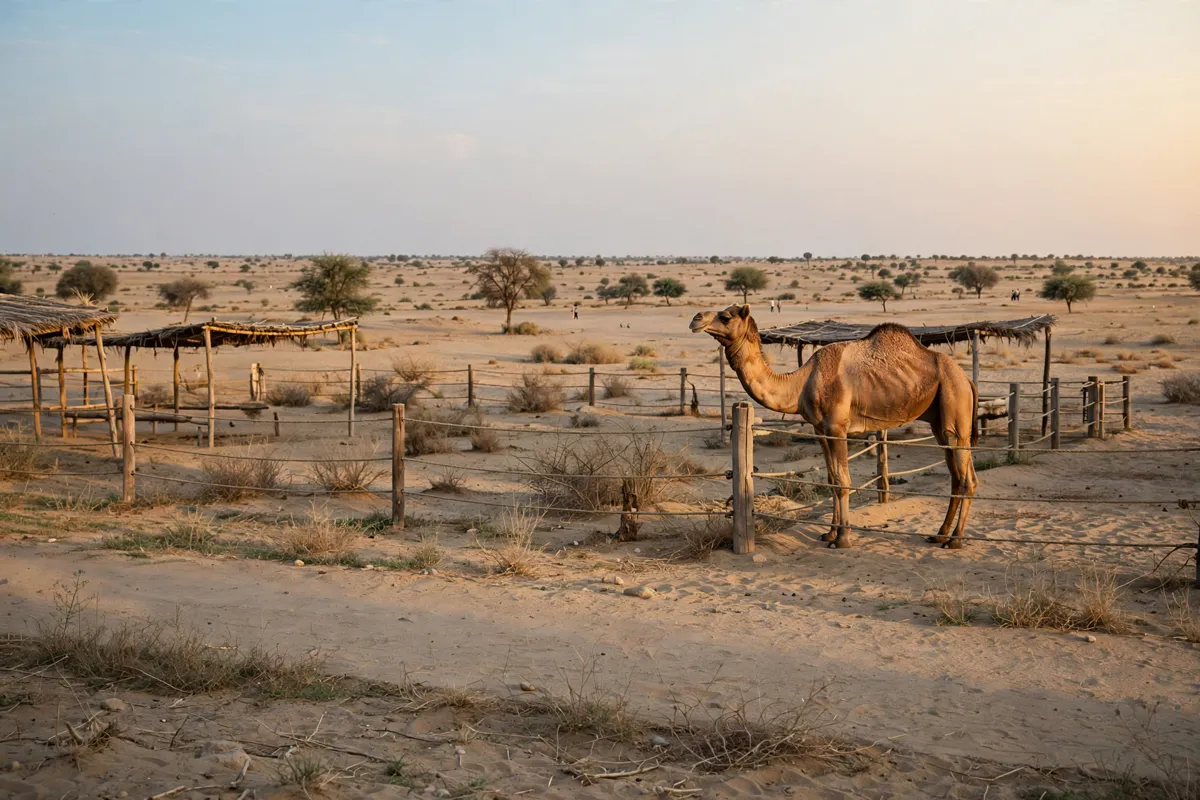
Afternoon option: the camel research centre
The National Research Centre on Camel is an afternoon option outside Bikaner city, 8 km from the city. Rajasthan Tourism says the centre offers camel rides and camel-milk products, including flavoured milk, camel-milk coffee, kulfi and cheese.
Incredible India gives visitor hours as 2:00 PM to 6:00 PM and says the centre is closed on Sundays and public holidays. If you plan to go, check the official site before you go.
Because the centre is outside the city, choose it in place of extra time in the historic core rather than trying to fit in every possible stop. For a city-focused afternoon instead, Bikaner’s markets are another itinerary theme; the guide to KEM Road, Kotegate and old-city bazaars covers those areas.
Route timing and practical adjustments
Keep the day in two parts: the fort first, then the old city’s havelis and temple stops. Decide after lunch whether the camel research centre’s stated afternoon hours work for your schedule, bearing in mind its Sunday and public-holiday closure.
For a temple stop beyond Bhandasar, Karni Mata Temple at Deshnok is known for kabas—rats that roam freely within its stone-and-marble precincts. It is a separate destination, so consider it as an alternative rather than adding it to a full city-centre itinerary.
Tanisha Heritage Haweli is about a 4-minute walk from Junagarh Fort, and the three-star hotel is also about a 7-minute walk from Bikaner city centre.
FAQs
When was Junagarh Fort built?
Raja Rai Singh constructed Junagarh Fort in 1588 AD.
What can you see at Bhandasar Jain Temple?
The temple is known for mirror work, murals and gold-leaf paintings.
What is the camel research centre known for?
Along with camel rides, it offers camel-milk products such as kulfi, cheese and flavoured milk.
What is distinctive about Karni Mata Temple?
The temple at Deshnok is known for kabas roaming freely within its precincts.